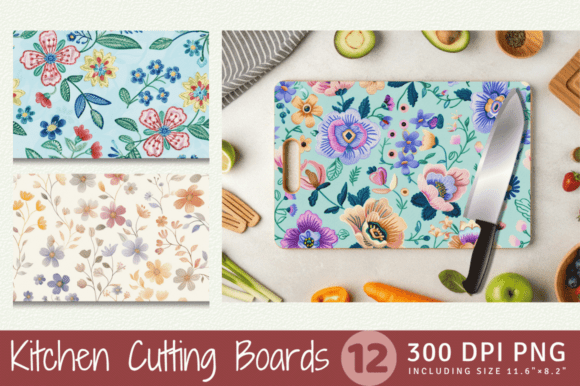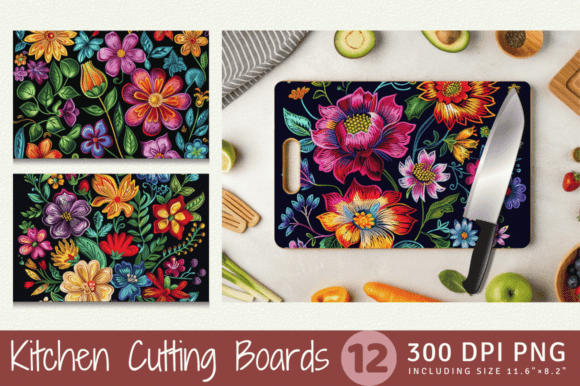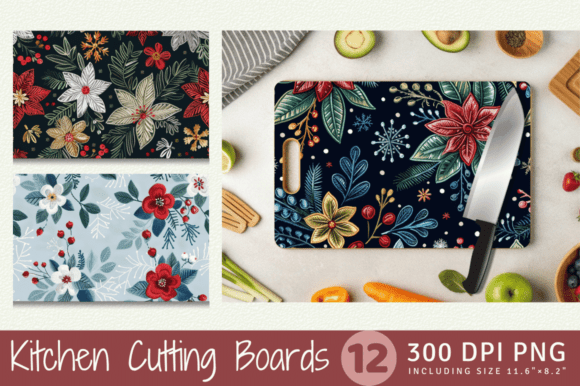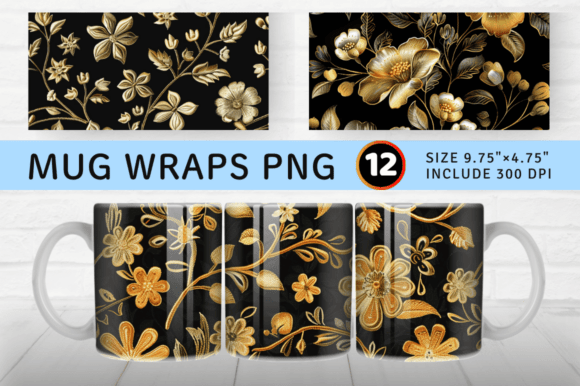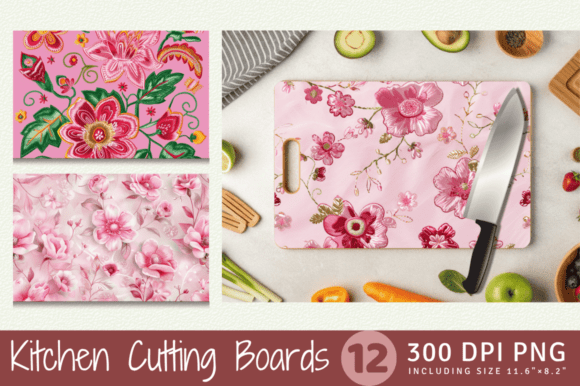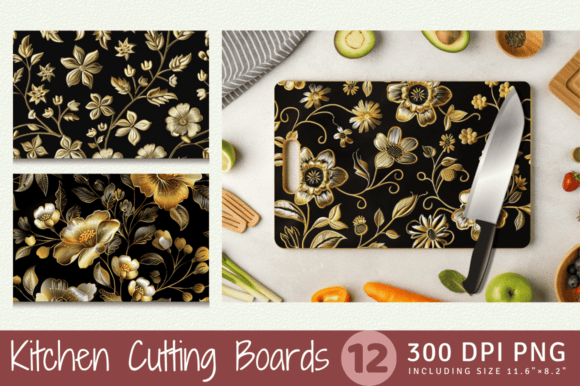
Gold Flowers Embroidery Cutting Boards: A Craft Fair Review
As an embroidery designer preparing my booth for another weekend craft fair, my first task is always to evaluate new designs. Today, I’m looking at Gold Flowers Embroidery Cutting Boards S, a high-quality design described for kitchen decor and print-on-demand. The immediate impression from the title is one of elegant and decorative style. It feels premium and aimed at cooking lovers, suggesting a blend of practical kitchen charm with a touch of farmhouse softness.
First Impressions & Booth Placement Strategy
When I unbox samples and lay out my table, I aim for a cohesive story. Gold Flowers Embroidery Cutting Boards S would stand out in the kitchen and home decor section of my display. Nestled among embroidered aprons and tea towels, this design’s floral, culinary theme would create a visual cluster that immediately attracts customers who love food-themed gifts. Its elegance suggests it shouldn’t be tucked away with funny or rustic designs; it deserves a spotlight next to my more premium handmade items.
The “gold” in the title is a key selling cue. On a dark fabric apron or a natural linen tea towel, gold thread evokes warmth and quality. Customers notice metallics and florals quickly at a craft fair—they feel giftable and special, not mass-produced. This design has the potential to elevate the perceived value of any product it’s applied to.
Performance Across Key Craft Fair Products
My real-world test is imagining this machine embroidery design on the actual products I sell. Here’s my professional judgment on where Gold Flowers Embroidery Cutting Boards S would perform best and what to watch for.
Tote Bags & Market Bags
This design would be a strong focal point on a tote bag. The floral motif is likely bold enough to be understood at a glance as someone walks past my booth. However, I must consider stitch density. If the design is very dense with many gold flowers, it could become heavy on a lighter bag fabric. I’d test it on scrap fabric first to check puckering and use the right stabilizer.
Aprons & Kitchen Towels
This is the natural home for this design. For apron embroidery, it would look beautiful on the chest pocket or along the bottom hem. On a tea towel, it becomes a decorative accent. The challenge here is fabric texture. Towels are often looped or terry cloth, which can obscure fine details. If the design has tiny details or small lettering (like “cutting boards” text), it might lose clarity. A larger hoop size and a crisp stabilizer setup are crucial.
Caps & Embroidered Patches
For caps, the curved surface requires careful planning. A large, dense design might not sit flat. This might work better as a smaller accent on the front of a cap, but I’d need to verify the embroidery file includes a suitably scaled version. As an embroidered patch, it could be stunning—a gold floral patch for a chef’s jacket or a reusable market bag. Patches sell well as add-on items at fairs.
Pillow Covers & Small Pouches
For home decor like pillow covers, this design adds a soft, kitchen-friendly touch. It feels repeatable for batch production if I’m making several pillow sets. On small fabric pouches (for utensils or spices), it becomes a delicate feature. The key is how it photographs for my Etsy listings and printable mockups. Gold on light fabric photographs beautifully, enhancing the handmade quality online and in-person.
Practical Production & Selling Points
Turning a digital embroidery file into a successful craft fair product requires a practical eye.
Design Clarity & Batch Production
Does the design work as a small accent and a large focal design? For batch production, consistency is key. If the design is complex with many thread colors, it slows down production but increases perceived value. I’d need to check the provided design assets to see if simpler alternate versions exist for smaller items like patches.
Photography & Online Appeal
This design, with its gold and floral elements, should photograph very well for online shops. It creates contrast and interest. For my booth display, having a real, well-made sample with high thread contrast on a dark fabric apron would be a powerful attention-grabber. It speaks to brand consistency if my booth carries a theme of elegant, usable kitchen decor.
Buyer Engagement & Perceived Value
At a fair, customers touch products. They feel the stitches. A well-executed Gold Flowers Embroidery Cutting Boards S on a sturdy apron feels premium and durable. It encourages questions about the process, which leads to engagement. It frames my work as commercial embroidery for small shop products, not just hobbyist craft.
Careful-Use Notes for the Embroidery Designer
Before I stitch this on any final product for sale, here are my essential checks.
- Test on Scrap Fabric: Always run the design on a scrap of the actual fabric you’ll use—be it thick canvas for a tote or textured towel.
- Check Thread Contrast: Gold thread on white looks bright, but on navy or black it becomes luxurious. Compare fabric colors.
- Review Spacing & Density: Inspect the stitch density in the file preview. Dense areas on curved cap surfaces or thin pouches can cause issues.
- Confirm Hoop Size: Ensure the design fits comfortably in your standard hoop sizes for efficient production.
- Use the Right Stabilizer: Match the stabilizer to the fabric weight and design density to prevent puckering.
- Create a Real Mockup: Before the fair, make at least one perfect finished product. This is your booth sample and proof of quality.
- Confirm Commercial Licensing: The description mentions it’s for print-on-demand sellers. I must verify the license allows for selling the finished product at craft fairs and in my handmade shop.
Final Craft Fair Judgment
Gold Flowers Embroidery Cutting Boards S presents a strong opportunity for craft fair sellers targeting kitchen and home decor customers. Its elegant, floral theme is visually appealing and feels giftable. It performs best as a focal design on aprons, tote bags, and pillow covers, where its premium quality can be fully appreciated. For production, attention must be paid to fabric texture and stitch density to maintain clarity, especially on items like tea towels or caps. With proper testing and a high-quality sample in the booth, this design can enhance booth display strength, drive buyer engagement, and become a valuable part of a cohesive handmade product line. Always remember: the beauty of a design file is only realized in the careful hands of the maker. Test, stitch, and display with confidence.